AGAVE
End-to-End Product Design for a DeFi Lending Protocol That Reached $20M+ in TVL
PROBLEM
01
HIGH BARRIERS TO DEFI ENTRY
In 2021, Ethereum mainnet fees made decentralized lending inaccessible for most users because of the high cost of transactions. There was a clear need for a high-utility lending solution on the xDAI Chain (now Gnosis) that could offer the same security as mainnet protocols for a fraction of the cost.
2021 Ethereum Gas Fee Overview
Transaction Type
Typical Gas Used
Estimated Cost
Simple ETH Transfer
21,000
$20 – $50
ERC-20 Token Swap
~100,000+
$100 – $200
DeFi Interactions
200,000 – 500,000
$200 – $700+
$20
Average for standard transfers
$196
Per transaction during May
Per transaction during May 2021
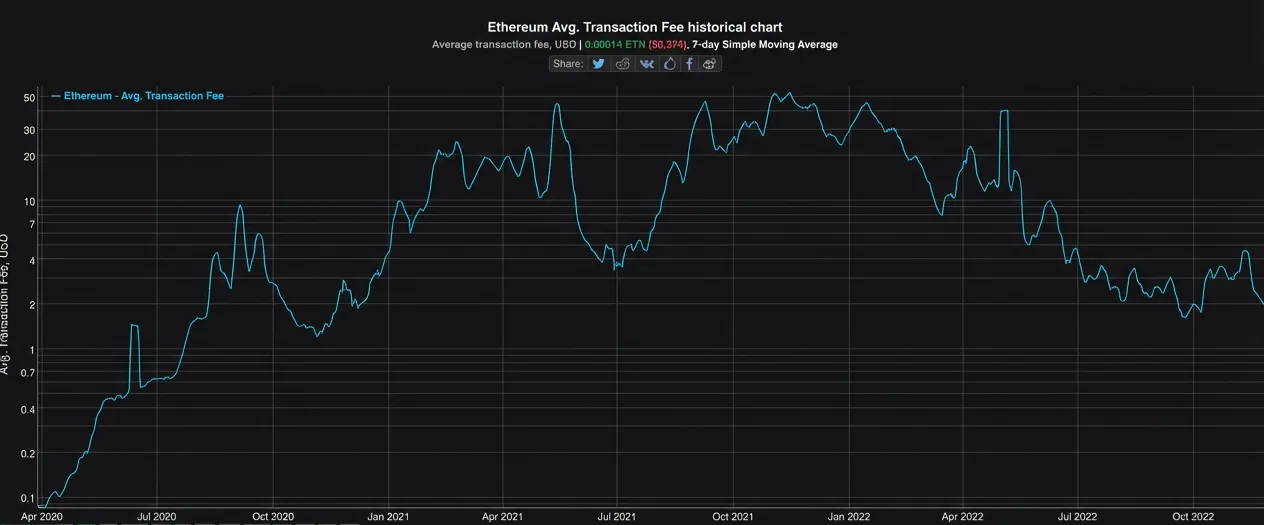
As a key project supported by 1Hive DAO, Agave was built to bridge this gap — providing a high-trust, low-fee alternative that allowed users to participate in decentralized lending without the barrier of mainnet gas prices reaching 20M+ Total Value Locked.
The users migrating to xDAI weren't beginners. They were cost-conscious DeFi participants who already knew how lending protocols worked — but had never used one outside of Ethereum mainnet. For them, gas savings alone weren't enough. The interface needed to carry the same trust signals they expected from Aave or Compound, on a chain that hadn't yet earned that credibility. That became the core design challenge: not simplification, but trust transfer.
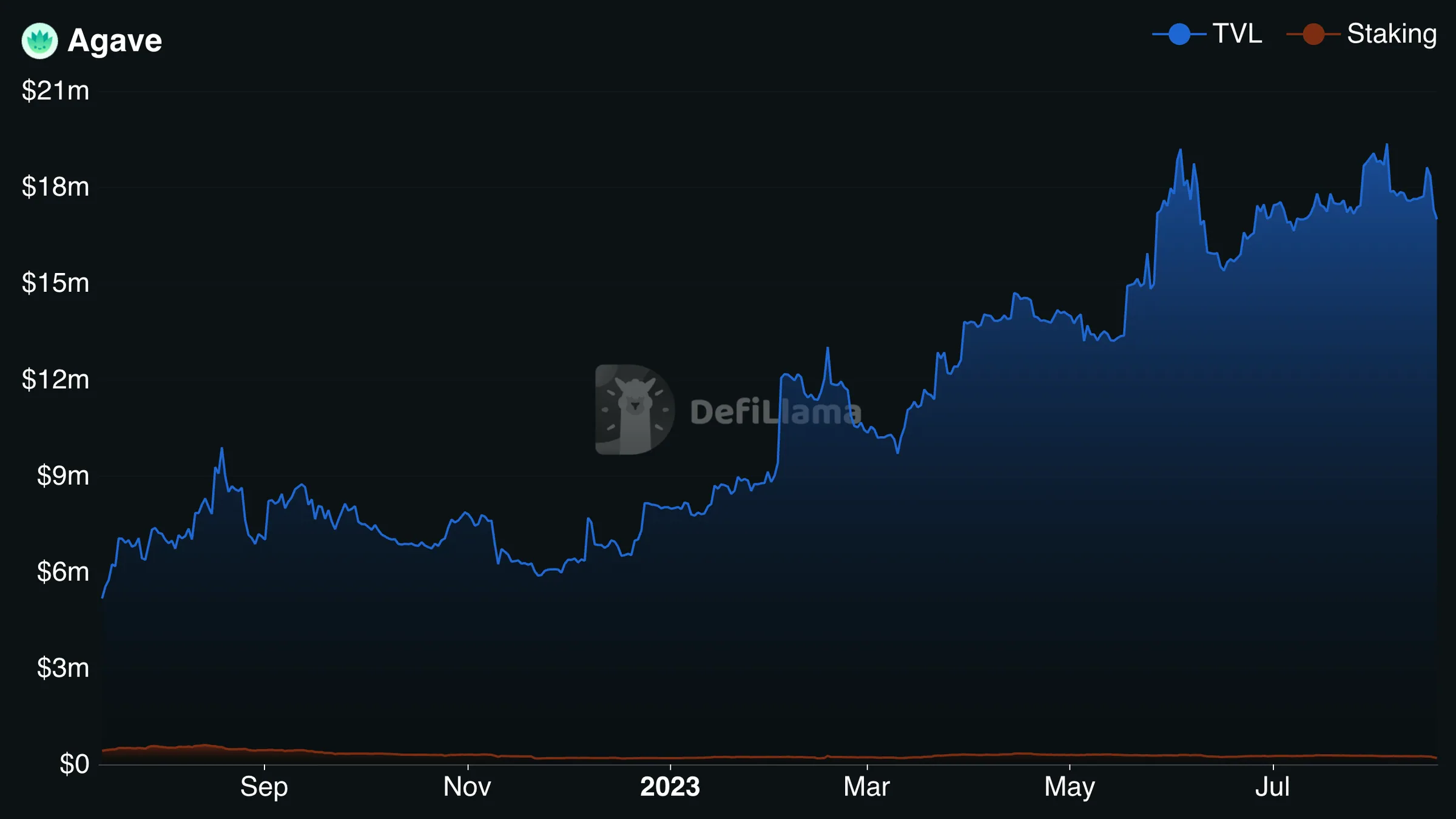
AGAVE TVL DATA FROM DEFILAMA
MY ROLE
02
FROM LOGO CONTEST TO DESIGN LEAD
My journey with Agave began at the community level when I entered and won the official DAO logo and branding contest on the 1Hive forum. This led to me being hired as Lead UX/UI Designer to establish the visual identity of the protocol and design its initial public presence.The role quickly expanded beyond branding into leading the full product execution of the dApp. I was responsible for translating the technical architecture of the protocol into a production-ready interface, maintaining consistency across the landing page, documentation, and the core lending dashboard.
Design
PRODUCT
UX/UI
Brand
TOOLS
FIGMA
AFTER EFFECTS
Timeline
FEB 21 - JAN 22
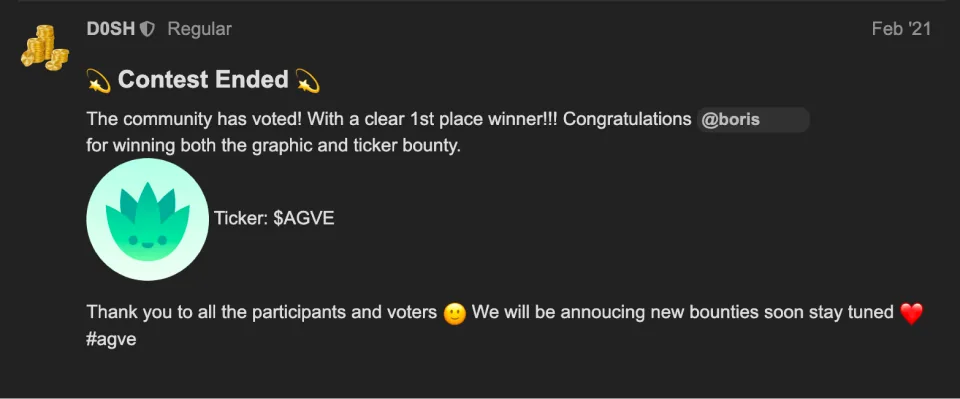
the Contest results Forum post
Team
I was the sole designer on the project, working within a small cross-functional team. Operating as the only designer meant owning every design decision end-to-end — from brand identity to interaction states — while staying in close alignment with engineering and product throughout.
Frontend DeveloperFull-Stack DeveloperSmart Contract DeveloperProject LeadBusiness Development ManagerCommunity ManagerTokenomics SpecialistMarketing Manager
RESEARCH
03
COMPETITIVE AUDIT + TECHNICAL DISCOVERY
Since Agave was built as a fork of Aave with added staking and rewards mechanics, I started research by using Aave, Compound, and Curve as a regular user — going through the full cycle of depositing, borrowing, and monitoring positions on each platform.The goal wasn't feature comparison. I was mapping how each protocol communicates risk and financial state at the moments that matter: before a user commits funds, while a position is active, and when market conditions shift. Aave served as the primary reference given the shared architecture, but Compound and Curve provided contrast — different approaches to the same core problem of making financial data legible under uncertainty.What emerged from this audit was a clear pattern: the platforms users trusted most weren't the ones that hid complexity — they were the ones that kept critical values permanently visible. Health factor, liquidation threshold, interest accrual — experienced users don't want these buried. They want them in peripheral vision while they act.In parallel, I ran ongoing technical sessions with the engineering team to understand how the protocol worked at the contract level — how collateral ratios are calculated, how liquidations are triggered, what happens to a position when market conditions shift. These sessions were the primary way I mapped what information a user actually needs at each decision point, and what the interface could never afford to hide. The output of this work was a clear information hierarchy for the dashboard: what lives at the top level, what requires one interaction, and what can be progressively disclosed.
Testing the first prototype with our developers
Testing the first prototype with our devs
The solution
04
TRANSLATING FINANCE INTO INTERFACE
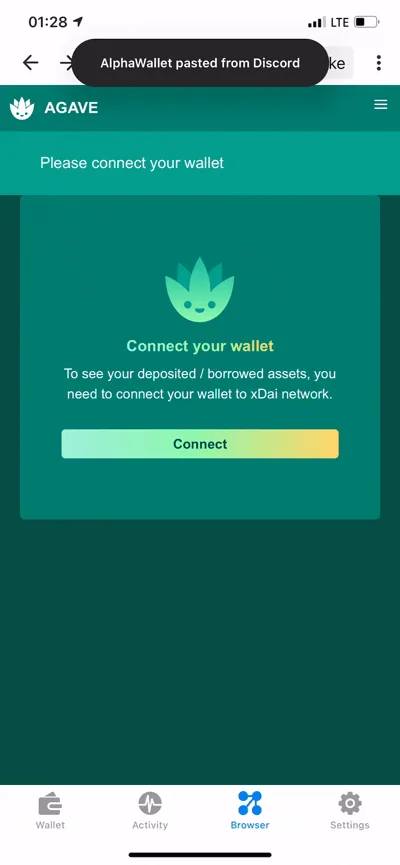
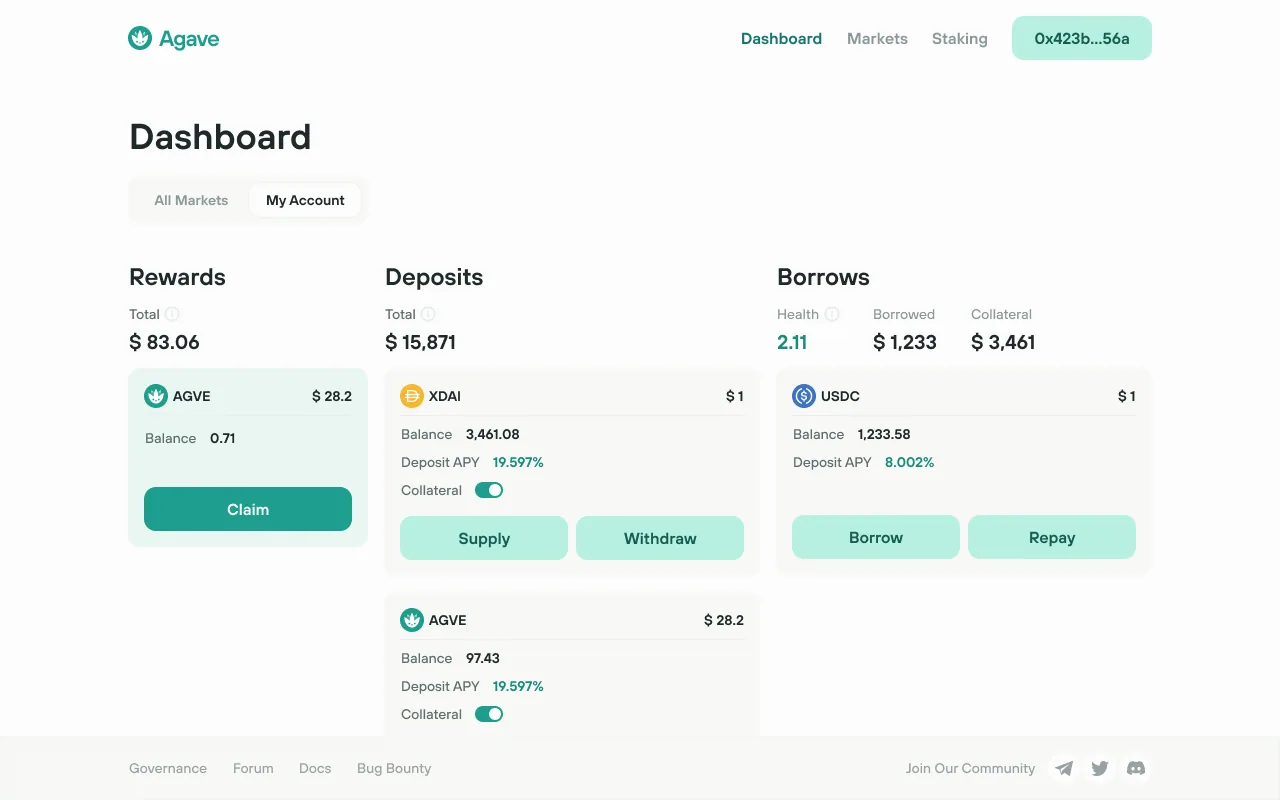
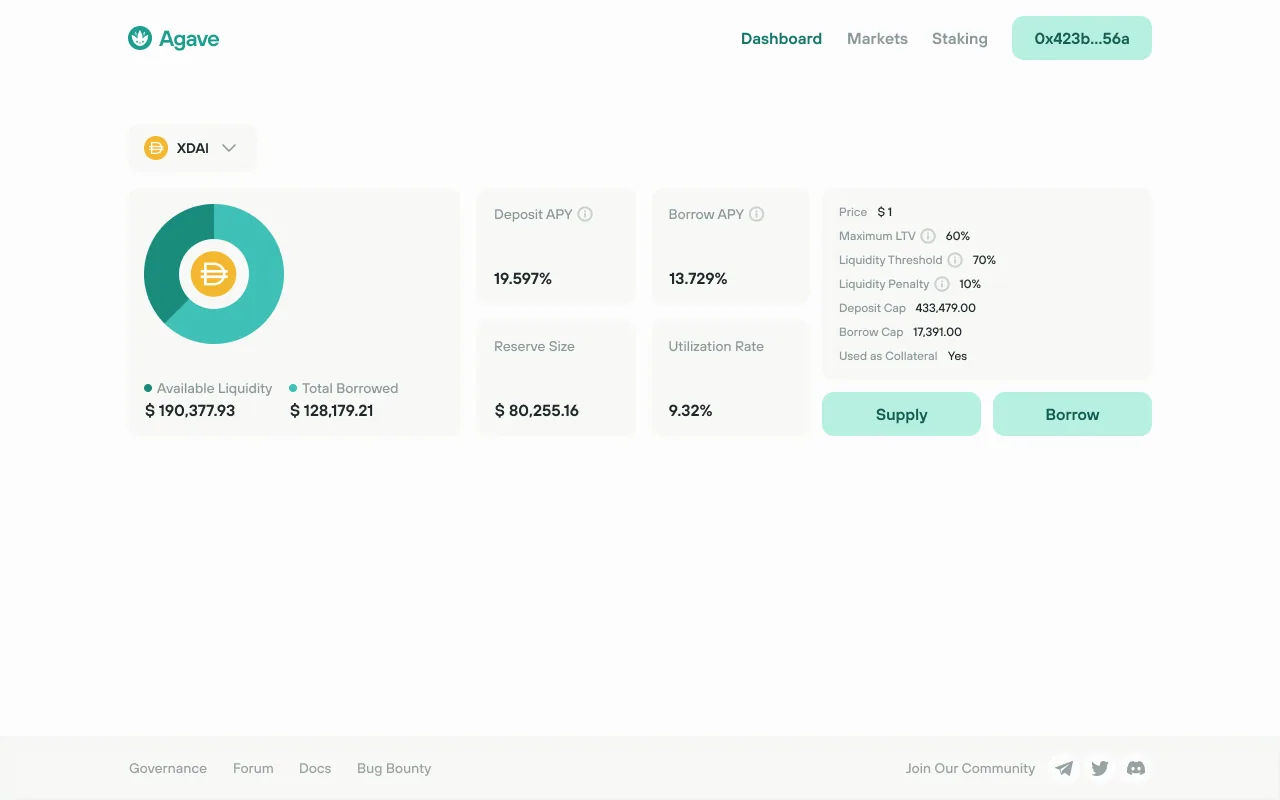
The final design translated complex protocol logic into a structured dashboard where Deposit, Borrow, Repay, and Withdraw actions were managed through a unified interaction system. The goal was to make the product predictable, transparent, and safe to use without requiring deep financial knowledge — while never hiding the data experienced users rely on.To support real usage contexts, I designed a mobile version that prioritized core positions and active financial states, allowing users to manage assets on the go.
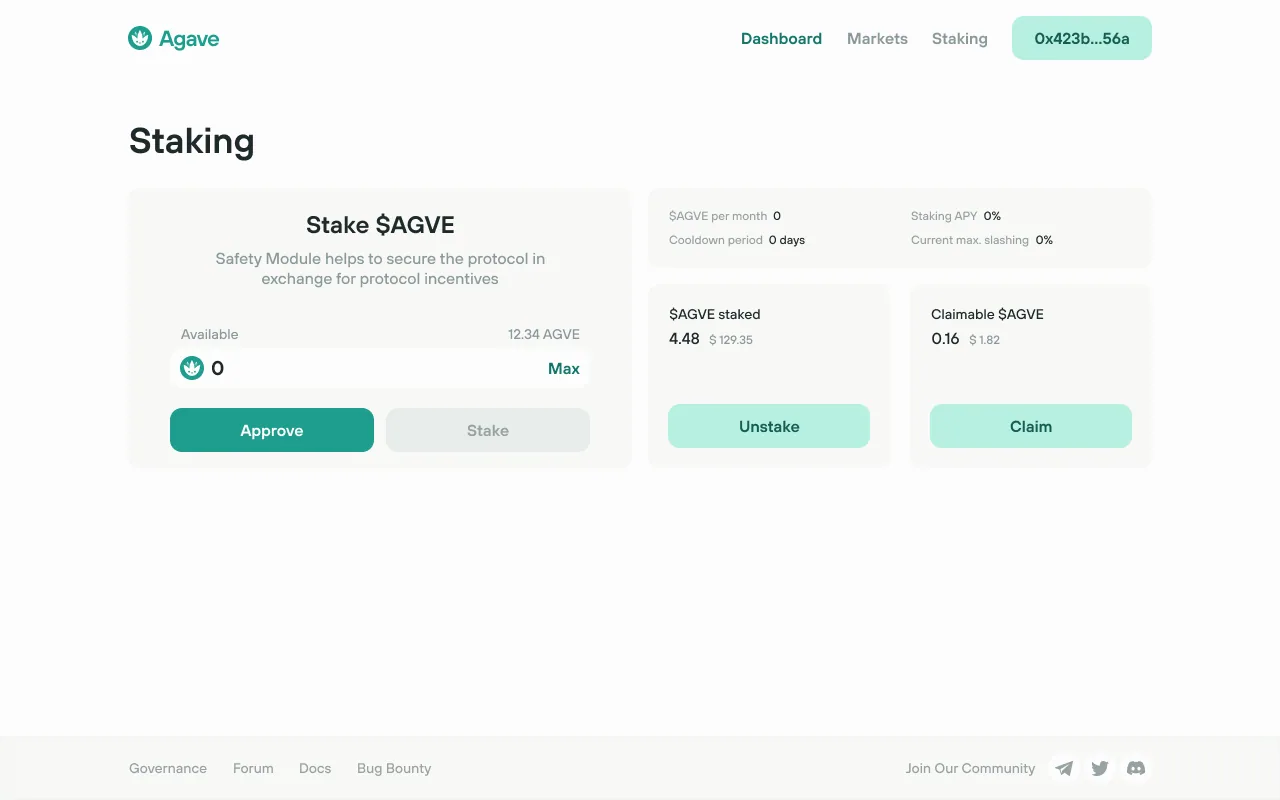
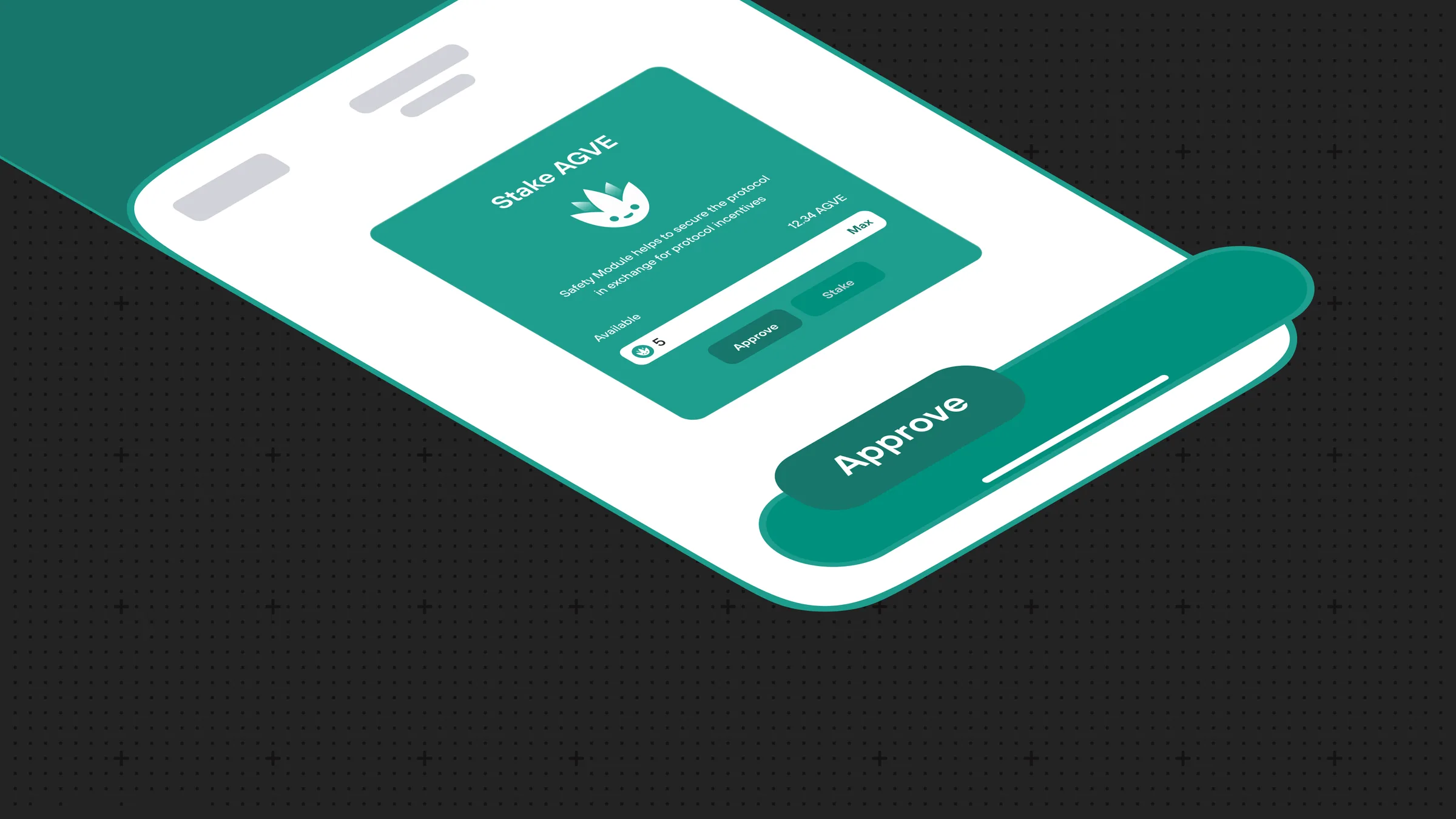
AGVE Staking — the key differentiator
While the core lending flows were inherited from Aave's architecture, the AGVE staking system required original design work. This was the primary feature that differentiated Agave from its source protocol, and it introduced a set of UX problems Aave's interface hadn't solved cleanly.Staking AGVE triggered a 7-day cooldown before withdrawal became available. This is a security mechanism — it protects the protocol from sudden liquidity exits — but from a user's perspective it's an invisible timer on their capital. The design challenge was making that timer feel transparent and controlled rather than punishing. I designed the staking section around explicit state communication: idle, cooldown active with days remaining, and ready to withdraw. Each state had a distinct visual treatment so users always knew exactly where they stood without needing to remember when they initiated the process.
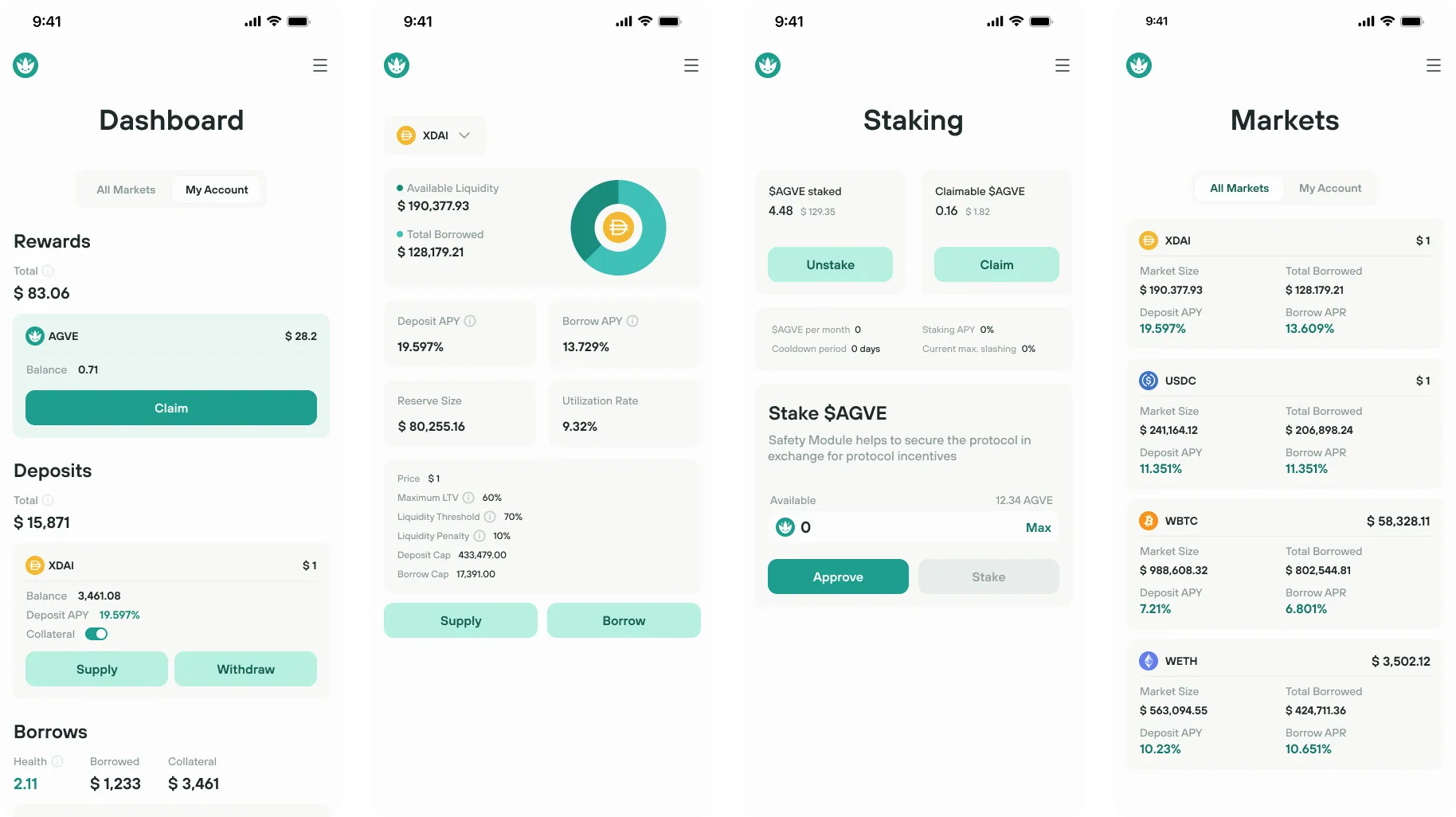
The second complexity was that rewards came from two separate sources — supplying assets to the lending pool, and staking AGVE — and these needed to be claimable independently. Users who supplied liquidity earned supply APY. Users who staked AGVE earned staking rewards. Both could be active simultaneously, but merging them into a single rewards view would have created confusion about what was earning what. I kept the two streams visually separated but surfaced them within the same profile section, so users could track total earnings while still understanding the source of each.Together, cooldown state visibility and dual reward stream clarity were the two decisions that made the staking module trustworthy for users managing real financial positions.

IMPACT
05
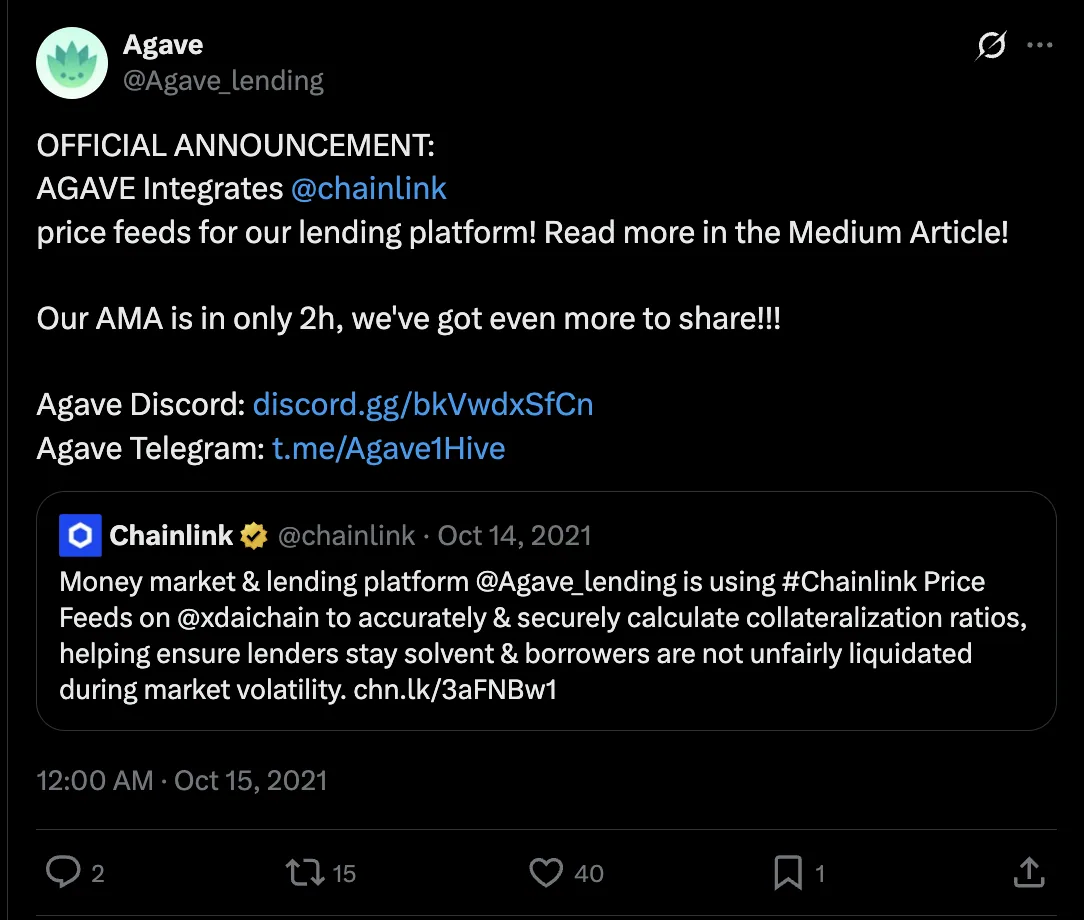
Standardizing the design early allowed the team to move from concept to a live product in just a few months, giving Agave a first-mover advantage on the xDAI chain before the broader Layer 2 expansion.
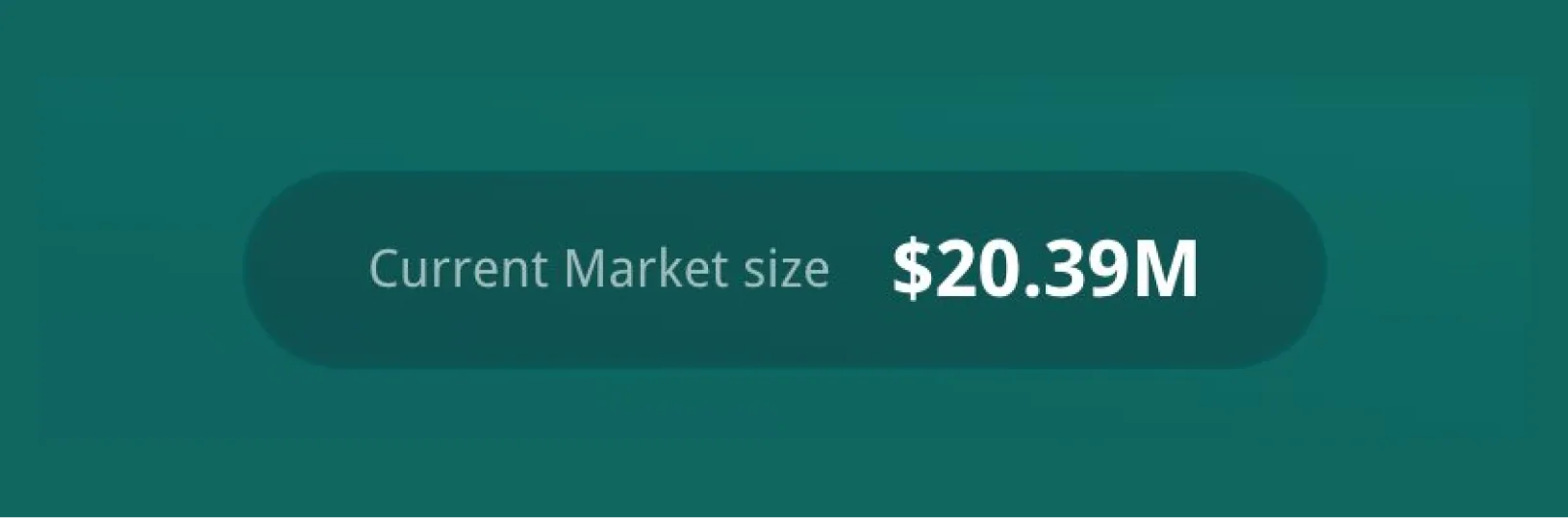
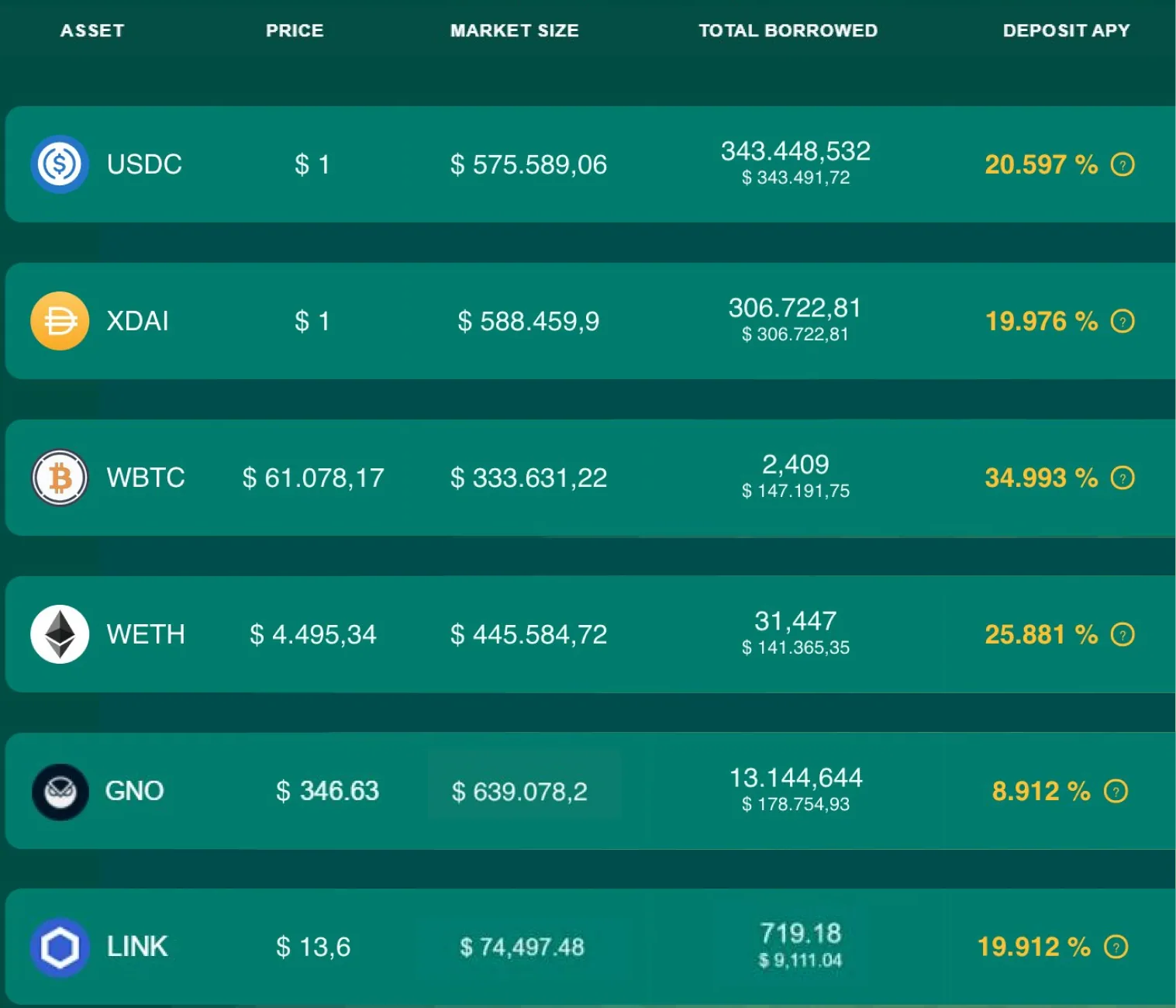
AGAVE UI TVL SCREENSHOT
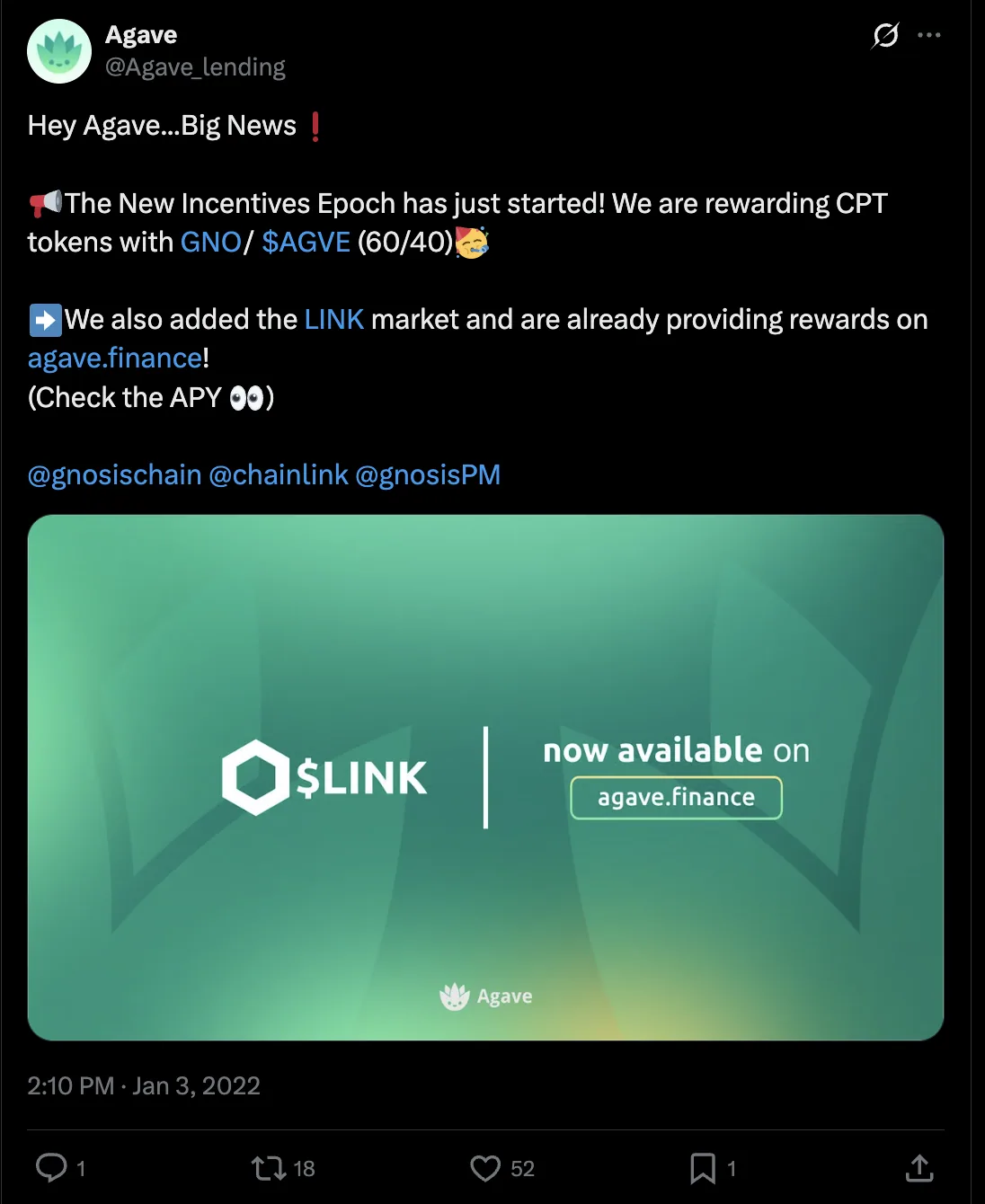
At its peak, the protocol reached over $20M in Total Value Locked, while the AGVE token achieved a $130M Fully Diluted Valuation. The mature product design and strong market presence enabled integrations and partnerships with Chainlink, Gnosis, and Symmetric, positioning Agave as a serious financial platform within the ecosystem.
Partnership TOKEN CAMPAIGNS
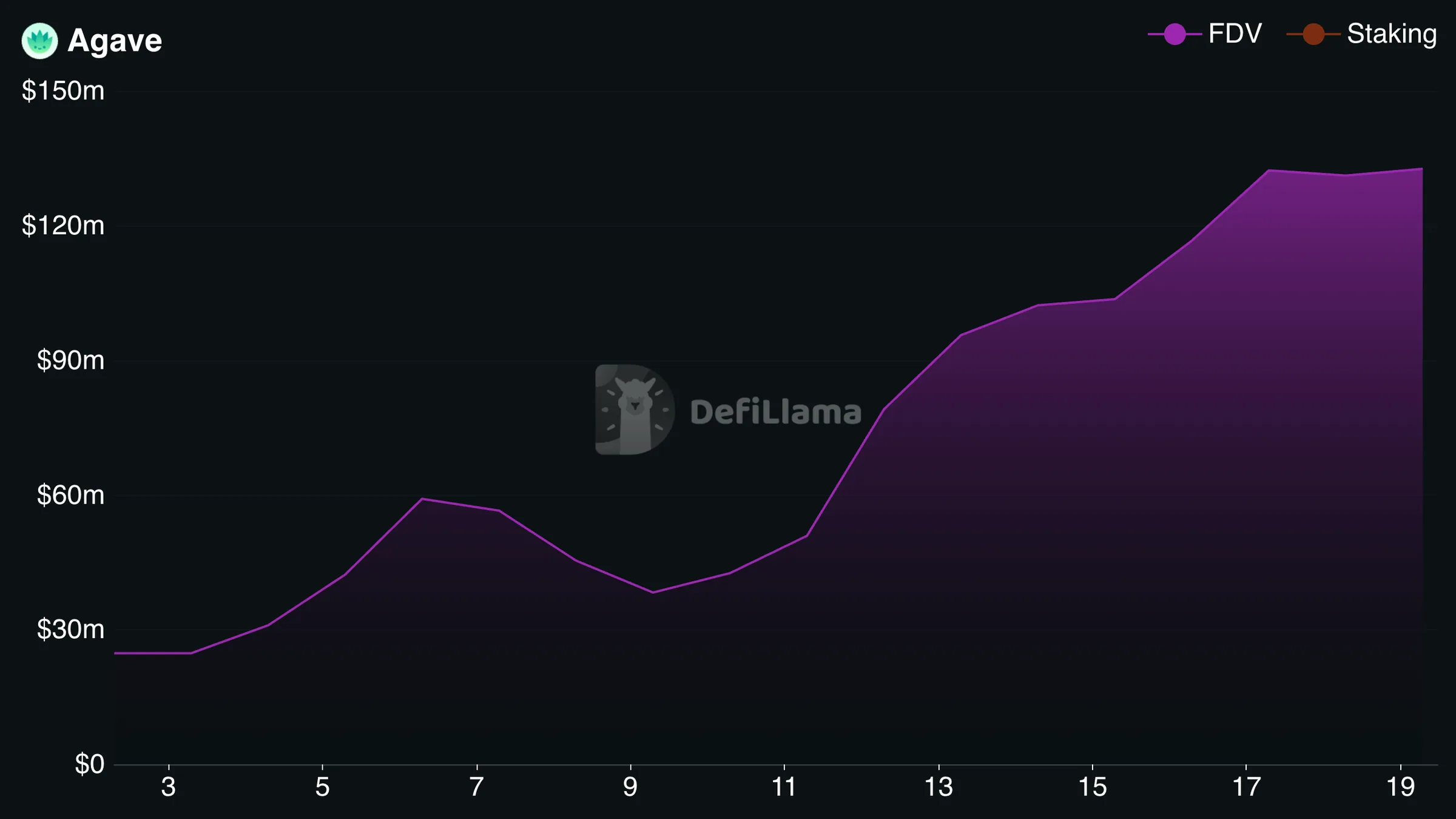
AGAVE ToKEN FULLY DILUTED VALUE DATA FROM DEFILAMA
Reflections
06
Leading the design for Agave gave me a practical foundation in building products constrained by real financial logic and irreversible user actions. I learned that in complex systems, design is not about simplifying reality, but about making it usable without hiding critical information.
Working inside a DAO taught me how to collaborate in fully decentralized teams, align design with smart contract development, and iterate openly in public. This project confirmed my ability to move from abstract systems to real, functioning products — balancing UX, technical constraints, and user trust in high-stakes environments.